Electric‑Motor Efficiency: Fundamentals and Practical Improvement Methods
An electric motor is a device that generates internal force through the interaction between the magnetic field of its windings and electric current, converting electrical energy into mechanical energy. When this process is reversed, mechanical energy turns into electrical energy, a function realised by generators. The operation of electric motors relies primarily on electromagnetic principles.
What Is the Efficiency of an Electric Motor
Efficiency, denoted by the symbol “η”, refers to the ratio of an electric motor’s output to its input and serves as a key performance indicator for motors. Specifically, it is the ratio of shaft output power to input power, expressed with the formulas below:
Efficiency of an electric motor = motor output power / motor input power
or η = output / (output + losses)
Zero‑loss machines do not exist. For this reason, the output power of any motor is always lower than its input power.
How to Improve the Efficiency of an Electric Motor
Losses inevitably occur when an electric motor converts electrical energy into mechanical energy. These include resistive losses, friction‑induced mechanical losses, magnetic‑energy dissipation core losses, as well as other losses related to material selection. Below are practical approaches to boost the efficiency of an electric motor.
Heat Dissipation
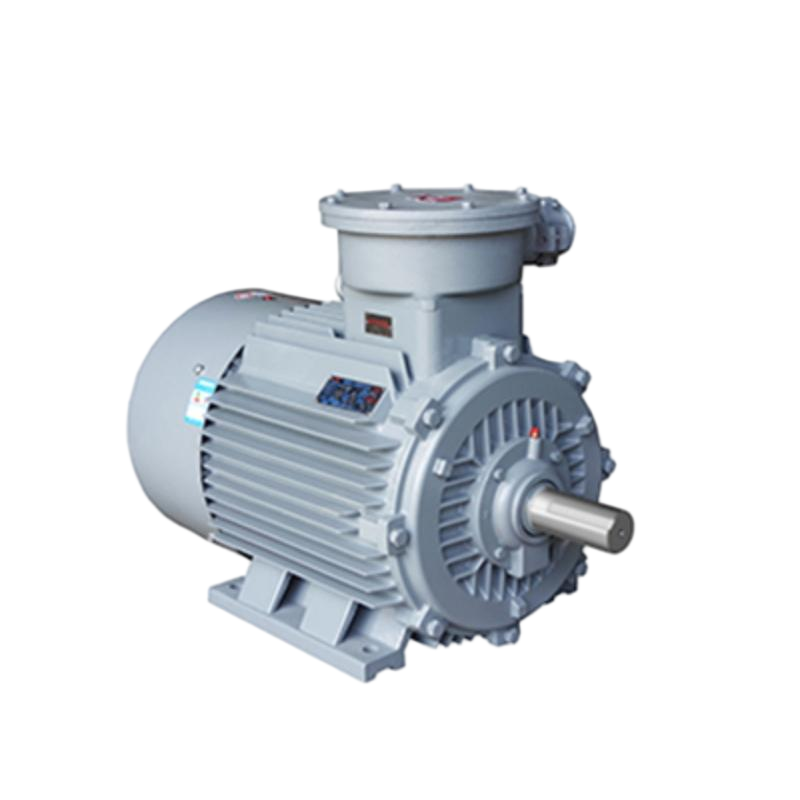
The motor frame offers mechanical protection for windings and provides mounting interfaces for motor feet. It is critical for thermal performance: it transfers internally generated heat to its outer surface, where fan‑driven airflow accelerates heat dissipation and cuts thermal‑related losses.
Stator
As a core component of synchronous motors, the stator accounts for roughly 60 % of total motor losses. Enlarging the mass of stator windings helps lower winding resistance. High‑efficiency electric motors adopt around 25 % more copper than standard‑efficiency counterparts for this purpose.
Rotor
Rotor losses represent a secondary loss source, mainly determined by motor slip. Reducing slip improves the efficiency of an electric motor, which can be accomplished by raising rotor electrical conductivity. Copper, with excellent conductivity, is widely utilised, and modern die‑casting technologies enable mass production of die‑cast copper rotors.
Lubrication
Lubrication service intervals depend on motor rated speed, bearing dimensions, grease grade and temperature rise. Proper lubrication practice is essential. Never mix different grease formulations, even with similar constituent elements. Mismatched grease will degrade the performance of permanent‑magnet electric motors.
Laminated Steel Sheets
Replace low‑cost carbon steel with silicon‑alloyed steel laminations to mitigate hysteresis loss and steel saturation, thus reducing core losses. Thinner laminations and longer lamination stacks further minimise magnetic flux density and core losses.