


Asynchronous Motor vs Synchronous Motor What Are the Main Differences
An electric motor transforms electrical energy into mechanical energy for mechanical work. AC motors fall into two main categories: synchronous motors and asynchronous motors. Though they share certain common features, they differ greatly in working mechanism and overall performance.
How Do AC Motors Operate?
DC motors generate mechanical force when a magnetic field exerts force on current‑carrying conductors. For AC motors, the rotating magnetic field (RMF) serves as the core operating principle. The stator holds multiple windings. Once fed with AC input current, these windings produce a fluctuating magnetic field that spins around the rotor.
Slip refers to the speed gap between the stator’s rotating magnetic field and the actual rotor speed. An AC synchronous motor features zero slip, meaning the rotor runs at exactly the same speed as the stator rotating magnetic field. An asynchronous motor has non‑zero slip, which represents the speed difference between the stator magnetic field and the rotor.
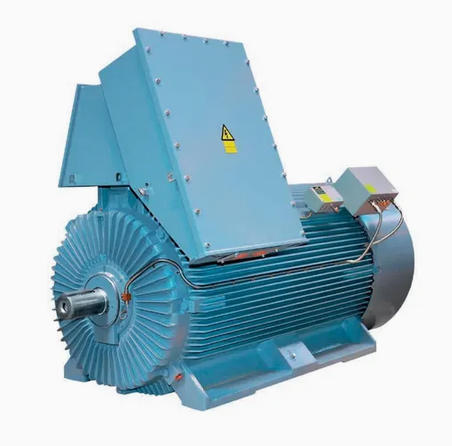
Synchronous Motor
As its name suggests, the rotor of a synchronous motor spins at synchronous speed, matching the rotational speed of the stator rotating magnetic field.
AC power fed to the stator creates the rotating magnetic field. The rotor builds up its magnetic field in two common ways: via external DC excitation through slip rings, or by adopting permanent magnet structures.
Magnetic poles on the rotor are manufactured to equal the stator pole count or its integer multiple. Once both stator and rotor get energized, the rotor magnetic field locks with the stator rotating field and rotates at identical speed.
Synchronous speed is determined by supply frequency and the pole number of stator windings. Hence, load changes will not alter the running speed. To adjust the speed of a synchronous motor, users have to modify the input supply frequency. Synchronous motors are available in 8‑40 pole configurations.
Asynchronous Motor
As its name indicates, the rotor speed of an asynchronous motor cannot keep pace with the stator rotating magnetic field. Practically, the rotor always turns slower than the stator RMF, which is caused by slip between stator field and rotor.
Asynchronous motors adopt two major rotor designs: squirrel‑cage rotor and wound rotor. The squirrel‑cage rotor uses thick copper bars interconnected at both ends by short‑circuit conductive end rings. The wound rotor carries multiple windings fitted on a laminated steel iron core.
The stator rotating magnetic field induces current inside the rotor. The induced rotor current generates an independent rotor magnetic field. Operating on electromagnetic induction theory, asynchronous motors are also widely known as induction motors. They can never reach true synchronous speed; actual operating speed stays below synchronous speed and is subject to motor slip rate. YB2 explosion‑proof asynchronous AC motor is one typical product of this category.
Summary
Synchronous motors deliver higher efficiency yet come with higher procurement costs. They are widely applied in ultra‑low‑speed scenarios and can realize power factor correction. In contrast, induction motors are cost‑effective and simple to maintain, suitable for high‑speed and variable‑speed working conditions.
Feel free to get in touch with us for further motor selections. Our product portfolio covers permanent magnet synchronous motors, low‑voltage squirrel‑cage motors and other related models.